
Small Details by Smart Paving Companies That Make a Big Difference
There's a common assumption that gets a lot of homeowners into trouble: that asphalt is just asphalt.
Call a few paving companies, collect a couple of quotes, pick the one that feels reasonable, and move on. The driveway gets done, it looks great, everybody's happy. Straightforward enough, right?
Except then a few years pass. And the pattern that keeps showing up is honestly surprising — two driveways, same street, similar budgets, completely different outcomes. One still looks like it was poured last spring. The other is already showing edge cracks, a soft spot near the garage, and a quiet little dip where water now collects after every rainstorm.
So what actually went wrong? Nothing dramatic, as it turns out. No defective material, no freak weather event. Just a handful of small decisions — or skipped steps — that quietly stacked up into a problem nobody saw coming. Here's what those decisions actually look like up close.
The Walkthrough Most Contractors Don't Bother With
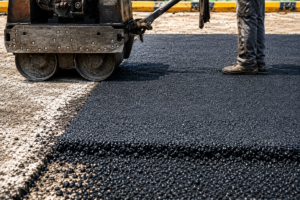
Before any equipment rolls onto a property, the driveway contractors worth hiring will do something simple but incredibly telling — they'll walk the site. Slowly. Deliberately.
They're reading how the yard drains after a heavy rain. Checking for soft zones in the soil, existing grade problems, places where water might eventually travel toward a foundation. This isn't a five-minute formality — it's the assessment that shapes every decision that follows.
When gathering quotes from paving contractors near me, ask each one what their pre-job process actually looks like. If the answer amounts to a rough measurement over the phone and a number sent by text, that's worth noting. Pavement companies near me that skip a genuine site evaluation are essentially operating on assumptions — and those assumptions have a way of becoming the homeowner's problem two winters later.
Water infiltration beneath the surface is behind a huge percentage of early asphalt driveway failures. It weakens the base, destabilizes everything above it, and the cracking begins. Not because the asphalt was poor quality. Because nobody took the time to figure out where the water was going to go.
The Layer Nobody Sees — Until Something Goes Wrong
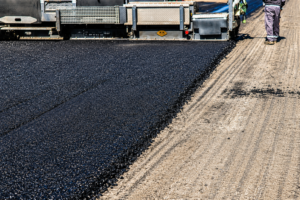
Here's what doesn't get said enough about asphalt paving: the most important part of the entire job is already buried by the time the finished surface is visible.
The compacted gravel sub-base sitting underneath a driveway is doing the majority of the real work. It distributes load, manages moisture movement, and gives the asphalt above it a stable foundation to bond to. Get it right and the driveway handles years of heavy vehicles and brutal freeze-thaw cycles without complaint. Get it wrong and even a flawlessly poured surface will begin shifting within a few seasons.
A good way to think about it — laying beautiful asphalt over a rushed base is like putting a perfect paint job on a rusted frame. Looks incredible on day one. Falls apart on its own timeline.
This is also where those suspiciously low asphalt driveway cost quotes tend to hide their savings. Fewer inches of gravel. Less time spent on compaction. Faster in and out. Cheaper upfront for the contractor, expensive later for the homeowner. The paving companies that do this correctly aren't inflating costs — they're building something that doesn't need to be redone in five years.
What the Edges Are Actually Telling You
If there's one fast way to read whether a crew genuinely cares about their work, look at where the asphalt meets everything else — the lawn line, the curb border, the transition to the walkway. Clean, defined, properly compacted edges aren't just more attractive. They're structurally critical. Unsupported asphalt edges are almost always the first place deterioration begins, and it moves inward from there.
The driveway contractors near me who handle this well take extra time around the perimeter — proper forms, deliberate compaction, sometimes physical edge restraints to keep things stable long-term. It adds time to the job. It also means the driveway holds its shape in year eight the way it did in year one.
Driveway paving near me companies that rush the edges are quietly communicating something about how they approach every other part of the job too.
The Temperature Window That Never Makes It Into the Brochure
This detail is genuinely invisible — it won't be seen during the job, and no contractor is going to bring it up mid-sales pitch. But it has a real and lasting impact on the final product.
Asphalt has to be laid and compacted within a specific temperature range. Outside that window — air too cool, wind too strong, ground temperature too low — and the compaction suffers in ways that don't announce themselves immediately. Over time, those weak zones show up as surface inconsistencies, premature cracking, spots that feel slightly off underfoot.
Professional asphalt company crews track mix temperature from the plant all the way to the driveway — accounting for drive time, ambient conditions, and what the ground itself is reading that morning. It's why the best driveway paving Ottawa contractors are deliberate about scheduling. Early pours on hot days. Hard stops as temperatures drop in the fall. What looks like scheduling preference is actually operational precision.
Sealcoating: Valuable Tool, Frequently Misused
Sealcoating earns its reputation when it's applied correctly — UV protection, moisture resistance, extended surface life. All legitimate benefits.
The timing, though, matters enormously. Freshly poured asphalt needs between six months and a full year to properly cure before sealing makes sense. The oils in the mix need time to stabilize and off-gas. Sealing too early traps that process and can actively work against the surface's long-term performance.
Some paving contractors push early sealing because it's easy additional revenue, not because the driveway is ready for it. The asphalt maintenance services in Ottawa providers operating with integrity will advise waiting — then return, inspect the surface properly, address any minor cracking first, and apply the right product for the specific conditions. Less convenient short-term. Much better for the driveway over time.
The Non-Asphalt Detail That Shapes the Whole Experience
Genuinely professional paving companies near me communicate — before the job, throughout it, and after it wraps up — without needing to be followed up with repeatedly.
Homeowners get a clear picture of what to expect on day one. There's someone reachable if a question comes up mid-job. And once the work is done, there's a proper walkthrough — how long before the surface can handle regular traffic, what to keep off it in the first few weeks, what seasonal maintenance looks like going forward.
The pavement companies near me that operate this way aren't performing customer service. It's simply how they run their business. And that instinct — to keep people informed and taken care of — almost always reflects the same care they bring to the parts of the job that happen before anyone's watching.
One Last Thing Worth Paying Attention To
Watch how a crew leaves a property when the job is done.
The team that sweeps the curb, removes tack oil from surfaces it shouldn't have touched, and hauls every bit of material away before they go — that's the same team that cared about base prep and checked mix temperatures. Cleanliness on a jobsite isn't a small thing. It's a signal about how a crew thinks when nobody's keeping score.
When searching for paving near me, that observation is worth more than a polished review count.
The Bottom Line
The best driveway paving near me companies won't always have the biggest equipment or the most aggressive marketing. What they'll have is a process — a consistent, detail-driven approach that produces the same quality result whether or not someone's watching closely.
When comparing quotes from driveway contractors near me, ask about sub-base preparation. Ask what temperature conditions they work within. Ask when they recommend sealing and why. The asphalt paving contractors who genuinely know their craft will answer those questions without hesitation — because for them, those details aren't add-ons. They're the foundation of everything.
At Black Tar Construction, that's exactly how every project gets approached — the details nobody sees, done right, every single time. If your driveway is due for work this season, reach out for a quote and see the difference firsthand.
FAQs
How do I know if a paving company is worth hiring?
The good ones show it early — they visit the site before quoting, ask about drainage, and walk through their process without being pushed.
Why is my driveway already cracking while my neighbor’s still looks brand new even though we hired paving contractors around the same time?
Two driveways can look identical on day one and age completely differently depending on base prep and drainage.
Should a lower asphalt driveway cost quote raise concerns?
Not always, but ask what's actually included. Paying slightly more for proper groundwork almost always costs less than fixing a failing driveway early.
How long should a well-installed asphalt driveway realistically last?
When done right, a driveway can hold up for 20 to 30 years with basic upkeep. Rushed jobs may start falling apart within three to five.
When should a new asphalt driveway be sealcoated?
At least six months to a year after installation. Fresh asphalt needs time to cure before anything gets sealed over it.