
Behind the Truck: What Paving Companies Don’t Advertise But Should
A truck rolls down an Ottawa street. Reflective decals, a phone number in bold, maybe a "Free Estimates" banner flapping off the tailgate. It's a familiar sight every spring — and it tells homeowners almost nothing about what actually matters.
Search driveway contractors near me and the results all start to blur together. Same promises. Same stock photos of glossy black asphalt. What's missing is the part that actually determines whether an asphalt driveway lasts five years or twenty — the stuff that happens before, during, and long after the truck leaves. None of it fits neatly on a flyer. Most of it should.
The Weather Window Nobody Talks About
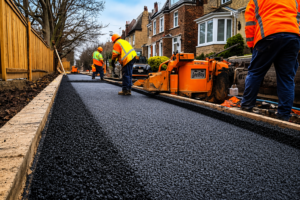
Here's an assumption worth challenging: any warm, dry day is a good paving day. It isn't.
For expert paving contractors near me, base temperature matters. So does humidity, wind, and — critically in this region — what the forecast looks like over the following 48 hours. Asphalt needs time to cure properly before it faces its first real test, and in Ottawa, that test often arrives fast. A poorly timed pour might look identical to a well-timed one. For about a year. Then the cracking starts.
This is where asphalt paving stops being a scheduling exercise and starts being a judgment call. Reputable paving contractors watch weather patterns the way a pilot watches instruments — not because it's exciting, but because getting it wrong is expensive. Ottawa's freeze-thaw cycles are unforgiving toward shortcuts, and timing is the first place shortcuts hide.
What's Under the Driveway Matters More Than What's On It
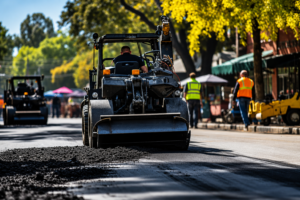
Nobody photographs the gravel. Yet base prep — compaction depth, drainage grading, the quality of the aggregate layer — is the single biggest factor in how long a driveway survives. It's invisible the moment the asphalt goes down, which is exactly why it's so easy to skip.
This is also why asphalt driveway cost estimates can vary by thousands of dollars for what looks, on paper, like the same job. A lower bid isn't automatically a worse one. But it's worth asking directly: what's happening beneath the surface? How deep is the base? How is water being routed away from the foundation?
Paving companies confident in their process tend to answer without hesitation. The ones who deflect the question are usually the ones cutting the corner nobody will see until winter two.
Not All Sealcoating Is Created Equal
Sealcoating gets marketed like sunscreen — apply generously, apply often, no downside. That's not quite true.
Applied too early, before asphalt has fully cured, sealcoating can trap moisture and actually accelerate damage. Applied on a rigid schedule rather than based on actual wear, it becomes a cost with no real return. Genuine asphalt maintenance services in Ottawa time this around the pavement's actual condition, not a calendar reminder set for convenience.
It's a small distinction. It also happens to be the difference between maintenance that protects an investment and maintenance that's really just an upsell wearing a protective coating.
The Estimate Isn't Just a Price — It's a Personality Test
Ten minutes in a driveway can reveal more about pavement companies near me than ten pages of marketing copy.
Does the estimator walk the full property? Ask about drainage patterns, tree roots, plow damage from last winter? Or is it a quick glance and a number scribbled on a card? The best paving companies treat the estimate as a diagnostic step — because a driveway isn't a flat surface in isolation, it's part of a whole property's water and freeze behavior.
Rushed estimates tend to predict rushed installs. It's a pattern worth watching while comparing quotes from different paving companies near me — the process on day one often mirrors the process on install day.
Aftercare Is Where Trust Is Really Tested
The invoice gets paid. The truck leaves. This is usually where the relationship ends — and where the real gap between paving companies shows up.
Curing time matters. So does knowing when it's safe to park a vehicle on new asphalt, how to handle the driveway's first Ottawa winter, what early warning signs of trouble actually look like. Few driveway contractors volunteer this information unprompted. Fewer still stick around to answer a question that comes up eight months later.
Given the climate here, aftercare isn't a bonus service. It's arguably the most important part of the job — just one that happens after the transaction is technically over.
What This Actually Means for the Next Search
None of this is secret information, exactly. It's just the part that doesn't make it into a truck decal or a five-star review headline. The next time a search for paving near me pulls up a dozen nearly identical-looking options, the real differentiator won't be visible in the photos.
It'll be in the timing decisions nobody sees. The base prep nobody photographs. The estimate that asks more questions than it answers. The follow-up call that happens without being chased.
Black Tar Construction process is built around exactly this — the parts of the job that don't photograph well but hold up when the freeze-thaw cycle inevitably arrives. Because a driveway's real test isn't the day it's poured. It's the fifth winter. The tenth.
The next search for driveway paving Ottawa or driveway paving near me is really a search for one thing: an asphalt company willing to talk about what happens behind the truck, not just what rolls out of it.
FAQs
1. How do I know if a paving company is cutting corners on base prep?
Ask directly — how deep is the gravel base, and how is drainage being handled? A contractor confident in their process answers without hesitation. Vague or rushed responses are usually a sign the base work isn't getting the attention it deserves, even if the final surface looks fine at first.
2. Why does the timing of asphalt paving matter so much in Ottawa?
Temperature, humidity, and the forecast over the following two days all affect how well asphalt cures. Ottawa's freeze-thaw cycles are especially unforgiving toward pavement that didn't get proper curing time, so a poorly timed pour might not show problems until the following winter.
3. Is sealcoating always necessary right after a new driveway is installed?
Not necessarily. Applying a sealcoat before asphalt has fully cured can trap moisture and cause more harm than good. Timing should be based on the pavement's actual condition, not a fixed schedule — something worth asking about before agreeing to add-on maintenance.
4. What should I expect during a driveway paving estimate?
A thorough estimate involves more than a quick look and a number. Expect questions about drainage, tree roots, and any existing damage from plows or freeze-thaw cycles. How much attention goes into this step often predicts how much care goes into the actual install.
5. Does driveway aftercare really make a difference?
Yes — significantly. Knowing when it's safe to drive or park on new asphalt, and understanding early warning signs of trouble, can extend a driveway's lifespan considerably. A contractor who's available for questions months later is usually one worth trusting from the start.