
Why Paving Contractors Ottawa Are Paying More Attention to Drainage Than Ever
Picture a driveway that looked perfect the day it was poured — smooth, dark, freshly rolled. By the following spring, it's webbed with cracks and a soft depression has formed near the garage. The homeowner assumes the asphalt was cheap, or the crew rushed the job. More often, the real story is simpler and less obvious: nobody thought carefully enough about where the water would go.
That's the quiet shift happening across the industry right now. Paving contractors Ottawa homeowners hire are no longer treating drainage as a footnote to the job. It's becoming the first conversation, not the last.
Ottawa's Winters Aren't Just Colder — They're Messier
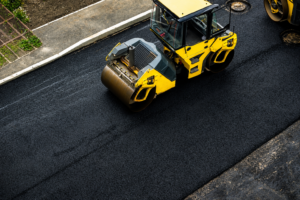
For decades, the assumption was straightforward: Ottawa gets cold, the ground freezes hard, asphalt needs to be thick enough to take it. That logic isn't wrong, exactly — it's just incomplete for the climate pattern showing up now.
What's changed isn't necessarily the depth of winter cold. It's the rhythm of it. Ottawa is seeing more mid-winter thaws, more freeze-refreeze cycles packed into a single season, instead of one long, stable freeze from December through March. On top of that, rainfall is arriving differently — heavier bursts compressed into shorter windows, rather than the slower, steadier soak the ground used to absorb more predictably.
That combination is tougher on pavement than straight cold ever was. A driveway that freezes once and stays frozen is fairly stable. A driveway that freezes, thaws, lets water seep in, then freezes again — repeatedly, over a single winter — is under constant, cumulative stress.
The Real Enemy Isn't Ice. It's Trapped Water.
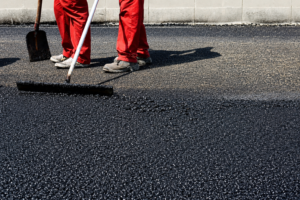
Here's the mechanic worth understanding: when water gets underneath asphalt and then freezes, it expands. That expansion pushes up against the pavement from below, and every refreeze cycle repeats the pressure. Eventually, the surface cracks, heaves, or sinks — not because the asphalt itself failed, but because water had somewhere to sit and nowhere to escape.
This is why the old shorthand — "thicker asphalt equals a tougher driveway" — doesn't hold up the way it used to. Thickness helps with load-bearing, but it does very little if water is pooling underneath the surface every winter. Driveway contractors who understand this are shifting their focus upstream, to the site prep and grading stage, before a single scoop of asphalt gets laid.
It's becoming one of the clearest ways to tell experienced paving contractors apart from crews that are just filling a driveway-shaped space. The good ones ask about slope, runoff, and soil conditions before they ask about color or edging.
What Smart Drainage Actually Looks Like
Good drainage design isn't one trick — it's a handful of decisions working together:
- Proper grading and slope during installation, so water is guided away from the home's foundation and low points instead of collecting on the surface.
- French drains or catch basins, particularly useful for properties with a high water table or a driveway sitting in a natural low spot.
- Permeable bases or gravel underlays that act as a buffer, giving water somewhere to move through rather than pool against the asphalt from below.
- Culvert and downspout redirection, so runoff from the roof or yard isn't quietly working against the driveway instead of alongside it.
None of this is exotic. It's foundational work — the kind that doesn't show up in a photo of the finished driveway but shows up very clearly five years later in whether that driveway still looks the way it did on day one.
The Cost of Skipping It
This is where the math gets uncomfortable for homeowners chasing the lowest quote. Any good asphalt company will tell you that skipping proper drainage planning doesn't eliminate the cost — it just delays it and usually multiplies it. Potholes, alligator cracking, base erosion, and premature sinking are rarely random; they're often the slow, visible result of water that had no planned exit route.
When homeowners compare asphalt driveway cost across quotes, it's worth asking what's actually being priced. A lower number that skips drainage prep isn't a discount — it's a deferred repair bill. A driveway that fails in year four because of standing water is, in almost every case, more expensive over its lifetime than one installed slightly more carefully from the start.
How to Spot a Contractor Who Takes This Seriously
Anyone searching driveway contractors near me, paving contractors near me, or pavement companies near me is likely comparing quotes that all sound reasonably similar on the surface. Drainage is where the real difference tends to show up. A few questions worth asking:
- Does the quote include a grading or slope assessment, or does it jump straight to material and cost?
- How is runoff from the roof or yard being handled in relation to the new asphalt driveway?
- Is post-installation care — sealing, crack monitoring, seasonal checks — part of what's offered, or is it a separate conversation later?
Contractors offering ongoing asphalt maintenance services in Ottawa as a natural extension of the original install tend to be the ones thinking about the driveway's full lifespan, not just the installation day. That distinction matters more with every unpredictable winter Ottawa has.
The Driveway That Could Have Lasted
Go back to that cracked driveway from the opening image. In most cases, it wasn't a bad asphalt paving job in isolation — it was a paving near me job that never accounted for where the water would go once winter set in. That's an easy detail to overlook and an expensive one to fix after the fact.
This is the thinking Black Tar brings to every driveway paving Ottawa project — treating drainage as part of the build from day one, not an upgrade tacked on after something goes wrong. For anyone comparing paving companies or planning a driveway paving near me search this season, a site assessment before the quote is a reasonable place to start. It's a smaller conversation than most people expect, and it's usually the one that decides whether a driveway lasts one winter or many.
FAQs
How much does an asphalt driveway cost in Ottawa?
Honestly, there's no flat number to give here. It hinges on the driveway's size, how much prep the base needs, drainage, and the thickness of asphalt going down. Two contractors quoting the same job can land far apart, usually because one of them is factoring in more groundwork before any paving starts. Yes, that costs more upfront — but it's often the difference between a driveway that's still fine in three years and one that isn't.
How often should an asphalt driveway be sealed?
Somewhere around two to three years works for most driveways in this city. The point of sealing isn't really cosmetic — it's about keeping moisture from getting in during the freeze-thaw stretch, since that's usually the thing that decides how long the asphalt holds up.
Why do driveways crack so much in Ottawa specifically?
The winters, mostly. Water slips into tiny cracks, freezes, expands a little, thaws out a few days later, then repeats — again and again through the season. Each cycle stretches whatever weak point was already there a bit further, including ones nobody would've noticed at first.
What should homeowners look for when hiring driveway contractors?
Real local experience, an actual drainage plan rather than an afterthought, a quote broken into line items instead of one lump sum, and some kind of warranty on the labor. A contractor who hasn't worked through Ottawa winters before might not be building for what this climate throws at a driveway.
How long does a properly installed asphalt driveway last?
With decent upkeep, 20 to 25 years is fairly normal. But shortcuts — a base that's too shallow, compaction that got rushed — will knock years off that, especially once a rough winter or two gets thrown in.