
Spring Driveway Damage? Here’s How Paving Contractors Ottawa Assess What Needs Fixing
You wake up one morning, coffee in hand, and decide to peek outside. You notice that what was once a smooth, solid surface now looks like it survived a minor earthquake. Cracks running in every direction. A pothole near the garage that definitely wasn't there in October. Chunks of asphalt that have crumbled at the edges like old bread. You stand there, coffee getting cold, wondering: Is this normal? Is it fixable? Or am I looking at a full replacement?
Here's the thing — you're not alone. This is exactly why experienced driveway contractors and asphalt maintenance services in Ottawa get slammed with calls every April. Spring isn't just when the damage becomes visible. It's when the damage becomes urgent.
In this post, we're pulling back the curtain on exactly how paving contractors Ottawa homeowners trust most actually assess spring driveway damage — step by step, no fluff, no upsell tactics. Just straight talk about what they're looking for, why it matters, and what it means for your wallet.
The Spring Walkthrough: How the Pros Actually Do It
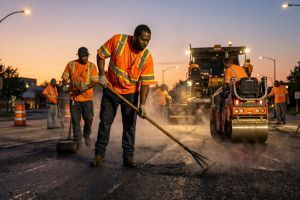
Here's something most people don't realize: a good assessment from reputable paving contractors Ottawa isn't just a quick glance and a quote. It's a methodical process — part detective work, part engineering, part experience. Here's how it breaks down.
Step 1: The Visual Sweep — The First 60 Seconds
The moment a professional from a trusted paving company steps onto your property, their eyes are already working. Before they say a single word, they're reading the surface like a map.
What are they looking for? Two things, mainly: cracking patterns and surface texture.
There's a big difference between hairline surface cracks (shallow, cosmetic, often just from oxidation) and what contractors call alligator cracking — a web-like pattern that looks exactly like reptile skin. Alligator cracking is named well, because it bites. It's a sign that the structural base beneath your surface has been compromised, and patching the top isn't going to fix what's happening underneath.
They're also watching for pooling water. Even on a dry day, you can spot the low points where water collects by looking at staining patterns on the asphalt. Water pooling in the wrong place is one of the biggest causes of long-term asphalt driveway failure — and it's something most homeowners never think to check.
Step 2: The Edge Inspection — The Forgotten Zone
Most homeowners focus on the middle of the driveway. Most paving contractors near me searches lead people to companies that will do the same. But the pros? They head straight for the edges.
Here's why: driveway edges are the most structurally vulnerable part of the whole surface. They lack the lateral support of the surrounding material, which means they're the first place to crack, crumble, and break away. Edge damage might look minor — a few chips here, some crumbling there — but what it actually signals is what matters most.
If the edges are deteriorating unevenly, or if the crumbling extends more than a few inches inward, it often points to a problem with the base layer rather than just the surface. That distinction is the difference between a $300 repair and a $3,000 replacement. A good driveway paving near me search should turn up contractors who make this distinction clearly, not ones who just sell you the most expensive option.
Step 3: The Press and Flex Test — Finding the Soft Spots
This is the step that looks the strangest to homeowners watching from the front porch.
A skilled contractor will walk your driveway slowly, paying attention to how the surface feels underfoot. What they're checking for is flex — a subtle give or bounce when pressure is applied. Your asphalt paving should feel firm, almost rigid. If there are areas where it feels slightly soft or spongy, that's a significant red flag.
Soft spots beneath the surface almost always indicate one of three things: water infiltration into the sub-base, a failed or improperly compacted base layer, or damage from freeze-thaw that has hollowed out the support structure beneath the surface.
This is also one of the key moments where pavement companies near me separate themselves from the crowd. Budget operators skip this step. Experienced ones don't — because a spongy driveway that looks fine on the surface is one heavy winter away from collapse.
Step 4: Pothole and Depression Mapping
Not all potholes are created equal. Some are surface-level nuisances. Others are symptoms of deep structural failure. Knowing the difference is something that comes from years of asphalt paving experience — and it directly determines whether your driveway needs a patch or a full tear-out.
Reputable driveway contractors near me will actually measure the depth, diameter, and location of every pothole and depression. Depth under half an inch? Likely patchable. Depth of an inch or more, especially in multiple locations? That's your sub-base talking, and it's not saying good things.
There's also a simple trick some pros use that you can try yourself: stick a pencil straight down into the pothole. If it goes in easily with minimal resistance, the material beneath has already broken down significantly. If it stops quickly, the damage is more contained.
Step 5: Drainage and Slope Analysis
This is the step most homeowners have never even considered — and it's possibly the most important one.
Every well-built asphalt driveway is designed with a slight slope so that water flows away from your home and doesn't pool on the surface. Over time, settling, heaving, and erosion can alter that slope. And when water starts pooling where it shouldn't, every other problem on this list gets worse.
A professional from a quality asphalt company will check the grade — sometimes with tools, sometimes just with a trained eye and a hose — to see where water is flowing and where it's sitting. This matters because even the best asphalt paving job in Ottawa will fail prematurely if the drainage underneath isn't properly addressed.
This is one of the most common corners cut by lower-end paving near me search results. They resurface the driveway, ignore the drainage problem, and leave you wondering why you're back to square one in two years.
What the Assessment Tells You: Repair, Resurface, or Replace?

After a thorough walkthrough, a good contractor from any reputable paving companies in Ottawa will give you one of three recommendations — and explain exactly why.
Minor maintenance covers crack filling, seal coating, and small pothole patching. This is the most affordable route and is appropriate when damage is truly surface-level. Expect asphalt driveway cost in this range to be a few hundred dollars.
Partial resurfacing — sometimes called mill-and-fill or an asphalt overlay — is the middle ground. It's the right call when the surface has widespread cracking or oxidation but the base is still structurally sound. Asphalt maintenance services in Ottawa that offer this option can often extend a driveway's life by 10–15 years at a fraction of full replacement cost.
Full replacement is the honest answer when the sub-base is compromised. It's more expensive upfront — asphalt driveway cost for a full replacement varies based on driveway size and base prep needed — but it's the only real fix when the damage goes all the way down. Reputable paving contractors will tell you this clearly, even when a patch job would make them more money in the short term.
Don't Wait Until It's a Disaster
Here's the honest truth: driveways don't fix themselves. That hairline crack you ignored last fall is wider now. The soft spot near your garage will be a pothole by summer. And the drainage issue that's been quietly pooling water against your foundation? That one's not just a driveway problem anymore.
Reach out to a trusted local asphalt company or driveway paving Ottawa professional this spring — before the season gets busy and the wait times stretch into summer. Your driveway has been through a lot. It deserves a proper look.
Looking for reliable paving contractors Ottawa? Get a free spring assessment from experienced driveway contractors at Black Tar Construction who know the city's climate — and give you straight answers, not sales pressure.
FAQs
Is it normal for my driveway to look worse in spring?
Yes, it happens a lot. Winter weakens the surface. When snow melts, all that hidden damage shows at once.
Repair or full replacement — how do I know?
If it’s small cracks, go for repair. If you see deep cracks, soft spots, or potholes, the base is likely damaged. That usually means replacement.
Do driveway edges really matter?
Yes, they do. Edges break first. If they’re crumbling, it can mean bigger issues underneath.
Why is drainage such a big deal?
Because water causes most damage. Poor drainage lets water seep in and weaken the base fast.
Can I wait before fixing it?
You can, but it may cost more later. Small issues grow quickly. Spring is the best time to fix them early.