
Why Your Asphalt Paving Is Already Failing And How to Fix It
There’s something satisfying about a freshly paved driveway. It just makes a home feel complete. But most people don’t think about what’s underneath. Or why one driveway lasts decades while another cracks in a few years.
Asphalt paving isn’t just laying blacktop. It takes the right materials, solid prep, and good timing. Once you understand that, you’ll see driveways differently — and you won’t trust just anyone to do the job.
It's Not Just Black Goo
Let's start with the material itself, because asphalt deserves more credit than it gets.
Most people picture a gloppy black substance and leave it at that. In reality, asphalt is a precise mixture of aggregates — crushed stone, sand, gravel — bound together with bitumen, a petroleum-based adhesive, and applied at controlled high temperatures. It's engineered, not just poured.
Here's a fun fact that tends to surprise people: asphalt is actually the most recycled material in North America. More than aluminum, more than glass. Old asphalt driveway material gets reclaimed and reused constantly — which makes it both cost-effective and environmentally smarter than most people assume.
And compared to concrete? Asphalt wins in colder climates almost every time. It flexes slightly with freeze-thaw cycles instead of cracking under pressure. For places like Ottawa, where winter is not polite, that flexibility isn't a bonus — it's essential.
What's Actually Happening Under the Surface
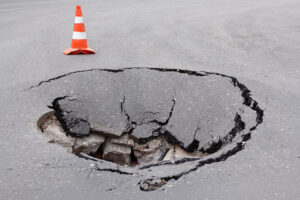
This is where most homeowners get caught off guard, and honestly, where most budget paving jobs fall apart.
A properly paved surface isn't just a layer of asphalt slapped onto dirt. It's a system built from the ground up. First comes the subgrade, the native soil that needs to be graded, compacted, and stabilized. Then the base layer, typically crushed stone, which is what actually carries the structural load. On top of that goes the binder course — a coarser asphalt layer — and finally, the smooth surface course you see and drive on.
Think of it like a mattress. The springs underneath determine whether you sleep well. The surface is just what you feel first.
This is precisely why experienced driveway contractors are worth vetting carefully. The base prep — the invisible part — is where cheap paving companies consistently cut corners. They skip the proper compaction. They go light on the base depth. The surface looks fine for a year, maybe two. Then the cracking starts, and you're back to square one.
When you're searching for driveway contractors near me or paving contractors near me, ask them directly: "What does your base prep process look like?" Most low-bid operations won't expect that question. Their answers will tell you everything.
So...What Does an Asphalt Driveway Actually Cost?
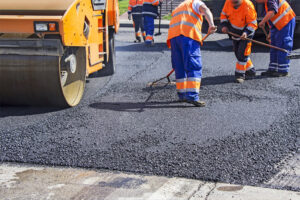
This is the question everyone searches for and rarely gets a straight answer on. So here it is, honestly.
Asphalt driveway cost varies based on several real factors: the square footage, the number of layers, how much grading and excavation the site needs, accessibility for equipment, and regional labor rates. In markets like Ottawa, pricing also reflects the short seasonal paving window and the heavier specs required for cold-climate durability.
A ballpark for a standard residential driveway sits somewhere between $3 and $7 per square foot — but that range is almost meaningless without knowing what's included. The smarter way to think about it is cost per decade. A well-built asphalt driveway that lasts 25 years with basic maintenance is dramatically cheaper than a low-bid job that needs a full replacement in eight.
When comparing quotes from pavement companies near me, don't just compare the bottom line number. Compare what's in the scope. Compare base depth. Compare mix specs. Compare warranty terms. That's where the real difference lives.
The Ottawa Factor: Why Location Changes Everything
Not all asphalt paving is created equal — and geography plays a massive role in how it should be done.
Driveway paving Ottawa comes with its own set of challenges. The freeze-thaw cycle here is relentless. Road salt accelerates surface deterioration. Spring thaw turns subgrades soft and unpredictable. An experienced asphalt company operating locally understands these conditions in their bones. They adjust the mix design, the base depth, and the drainage planning accordingly.
This is why searching for driveway paving near me and actually choosing a contractor with deep local roots matters. A company that's been paving Ottawa driveways for years has seen what fails and what holds. They know the soil conditions by neighborhood. They know the timing windows. That's not something a low-cost crew from out of town brings to the job.
Proper asphalt maintenance services in Ottawa also account for this climate reality — and they're not optional if you want your investment to last.
The Part Everyone Skips (And Almost Always Regrets)
Here's an uncomfortable truth: most driveway problems aren't paving failures. They're maintenance failures.
A freshly paved surface is just the beginning. What keeps an asphalt driveway looking sharp and structurally sound for 20-plus years is what happens after the crew packs up.
Sealcoating — applying a protective coating to the surface — should happen within the first year and then every three to four years after that. It blocks out water, UV damage, and road salt. It's not glamorous, but it's the single most cost-effective thing you can do for a driveway.
Crack filling is the other big one. Small cracks are cosmetic. Ignored cracks become water channels. Water channels become heaved, broken pavement. The math is simple: a $200 crack fill now versus a $6,000 replacement later.
Quality asphalt maintenance services in Ottawa cover both — plus line striping, pothole patching, and drainage assessments. These aren't upsells. They're the difference between a driveway that lasts 12 years and one that lasts 28.
That neighbor whose driveway still looks almost new after 15 years? They sealed it. They filled the cracks when they were small. They didn't wait.
Choosing the Right Contractor: Searching Smart, Not Just Fast
Typing paving near me into a search bar and calling the first result is not a strategy. It's a gamble.
Here are five questions worth asking any paving contractors before you sign anything:
- Do you handle your own base prep, or do you subcontract it?
- What asphalt mix specification are you using for this job?
- Can you show me a recent local project I can visit or verify?
- What's your warranty, and is it written into the contract?
- Are you fully licensed and insured in Ontario?
A confident, experienced asphalt company answers all five without hesitation. Hesitation — or deflection — is your answer.
Watch out for red flags too: door-to-door quotes offering to use "leftover asphalt" from another job, no verifiable business address, pressure to sign same-day. Legitimate paving contractors near me don't operate that way. They have reputations to protect and references to back them up.
The Craft Behind the Crew
Here's something that doesn't get said enough: the best asphalt paving crews genuinely take pride in their work.
Reading the grade of a site, managing the temperature window between mix delivery and compaction, operating a paver to get a consistent, smooth finish — these are skills developed over years. The clean edge where asphalt meets a garage slab. The subtle pitch that directs water away from a foundation. The uniform density that prevents future soft spots.
That's not just construction. That's craft. And it's the difference between a job that looks good on day one and a surface that holds up through fifteen Ottawa winters without complaint.
The Driveway You'll Stop Apologizing For
Great asphalt paving isn't a transaction — it's a system. It starts with the right base, gets built with the right materials, and stays strong through consistent, simple maintenance. It's carried out by contractors who know the local ground, respect the process, and stand behind their work.
Now that you know what goes into it, you're not just a homeowner Googling paving companies and hoping for the best. You're someone who knows what questions to ask, what to look for, and what good value actually looks like.
That fresh, clean driveway? You've earned the right to know exactly what it's made of. So call the experts at Black Tar to get started.
FAQs
Q1. How long does an asphalt driveway last?
A properly built asphalt driveway can last 20 to 30 years. The neglected ones start falling apart a lot sooner.
Q2. When’s the best time for asphalt paving in Ottawa?
Late spring to early fall is usually the best time for homeowners.
Q3. Is the cheapest asphalt paving quote worth it?
Usually not. Cheap quotes often mean shortcuts somewhere in the process. A good driveway costs more upfront, but it saves you from cracks and repairs later.
Q4. Do I really need sealcoating?
Yes, if you want the driveway to last. Without sealcoating, asphalt dries out and cracks much faster over time.
Q5. What are the biggest red flags with paving contractors?
Be careful with anyone offering “leftover asphalt” deals at your door. That’s a common one. Vague pricing, pressure to sign quickly, and no local references are also bad signs.